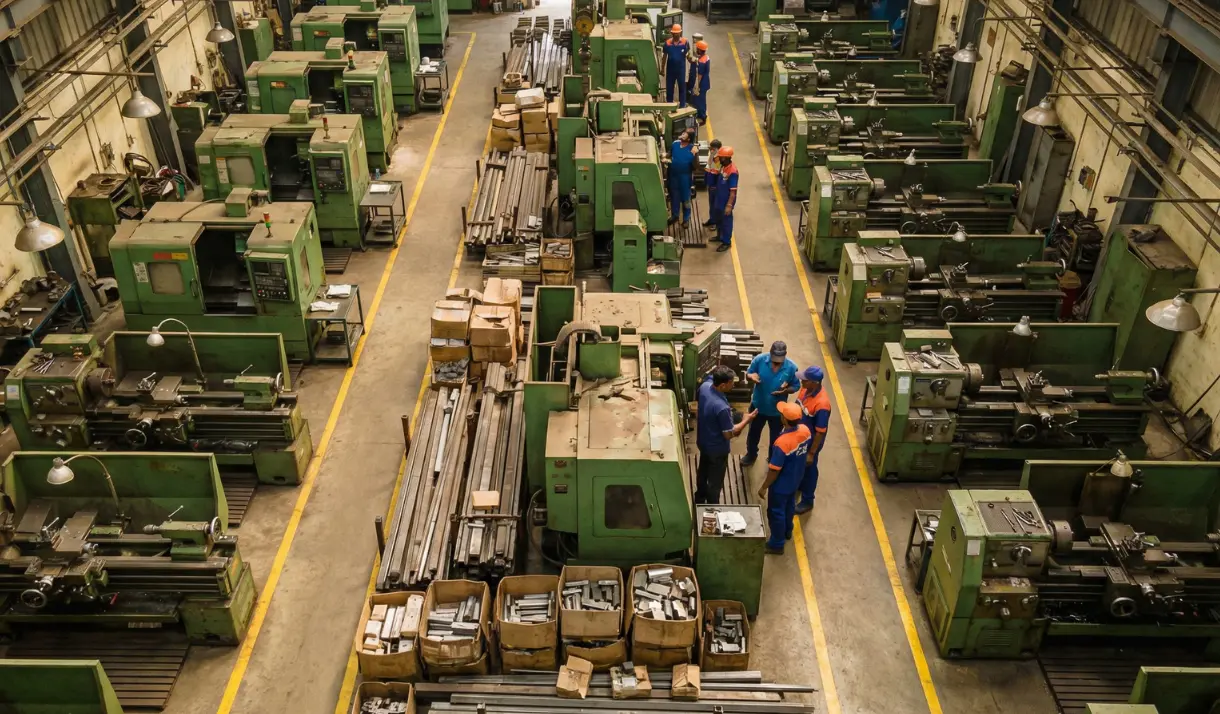

Every March, a familiar pattern begins to appear inside many manufacturing plants.
Stores team begin recounting inventory. Accounts team starts asking for updated WIP numbers. Production supervisors try to close long-running jobs, while purchase team revisit old purchase orders and vendor invoices.
Suddenly, questions begin to surface. Stock figures are checked more carefully. WIP values are reviewed. Material consumption records are retraced.
Often, the full operational picture looks different from what everyone assumed during the year.
This moment, when year-end pressure forces the factory to see its real numbers, is what many plants experience as the March Visibility Shock.
The Visibility Gap
Most manufacturing plants don’t lack skilled people or machines. They lack connected visibility.
Information lives in different places:
- Inventory records with stores
- Production updates on the shop floor
- Purchase orders with procurement
- Financial numbers with accounts
Each team sees its part of the operations. But the business rarely sees the entire picture at once.
Small gaps begin to form. Inventory appears accurate but hides unrecorded consumption. WIP values stay unchanged even as jobs move forward.
During the year, operations keep moving, so these gaps stay unnoticed.
Why March Exposes Everything
March places unusual pressure on manufacturing plants because the financial year must close with accurate and traceable numbers.
Inventory values must be finalised, WIP must be reconciled, and financial statements must reflect actual production activity. Auditors also require records that clearly connect stock movements, production progress, and accounting entries.
To make this possible, operational records that normally remain separated must align:
- Inventory records with physical stock
- Production activity with WIP values
- Material consumption with issued materials
- Purchase transactions with vendor invoices and goods received
When these pieces are finally connected, gaps that accumulated quietly during the year begin to surface.
March does not create these problems. It simply reveals them.
The Cost of Year-End Visibility
When factories only see the full operational picture during year-end, the consequences go beyond the reconciliation work done in March.
Over time, this culture of annual visibility creates several operational risks.
1. Cost distortion
When WIP and material consumption remain inaccurate for long periods, product costing gradually drifts away from reality. Margins may appear stronger or weaker than they actually are, affecting pricing and profitability decisions.
2. Working capital confusion
Inventory reports may show comfortable stock levels while materials remain tied up in unresolved WIP or slow-moving items. Management may underestimate how much cash is actually locked on the shop floor.
3. Planning based on assumptions
Production schedules and procurement plans rely on accurate stock and job progress data. When these numbers are verified only during year-end, planners often spend the rest of the year working with incomplete information.
4. Year-end operational stress
Instead of being a routine accounting exercise, March becomes a period of intense reconciliation, corrections, and cross-department coordination.
From Annual Visibility to Continuous Visibility
Leading manufacturing plants do not wait until March to understand their operations.
Instead of discovering problems during year-end reconciliation, they maintain continuous visibility throughout the year. When operational records stay aligned every day, the financial year closes naturally.
March no longer becomes the moment when factories discover their real numbers. The numbers stay visible throughout the year.
How a Manufacturing ERP Changes the Equation
Continuous visibility is difficult to maintain with disconnected records and manual updates. It requires systems that keep operational and financial data aligned as work happens.
A manufacturing ERP connects inventory, production, procurement, and finance into one transaction flow, so visibility remains consistent throughout the year.
• Accurate inventory
Material issues, returns, and consumption update stock levels immediately.
• Live WIP tracking
Production progress reflects automatically in WIP values.
• Consumption-linked costing
Material usage connects directly to production jobs.
• Connected purchasing records
Purchase orders, receipts, and vendor invoices remain aligned.
• Shared operational view
Stores, production, procurement, and accounts work from the same data.
Instead of reconciling information at year-end, the factory operates with visibility every day.
Final Thoughts
March often behaves like a mirror for many manufacturing plants. The entire operation becomes visible. Inventory, production, purchasing, and finance align, and the real numbers appear.
But mirrors should not appear only once a year.
Plants that build connected systems see their operations clearly every day. Transactions capture reality as it unfolds, keeping the entire organisation aligned.
In those environments, the year doesn’t reveal itself in March.
It unfolds clearly day by day as the business runs.