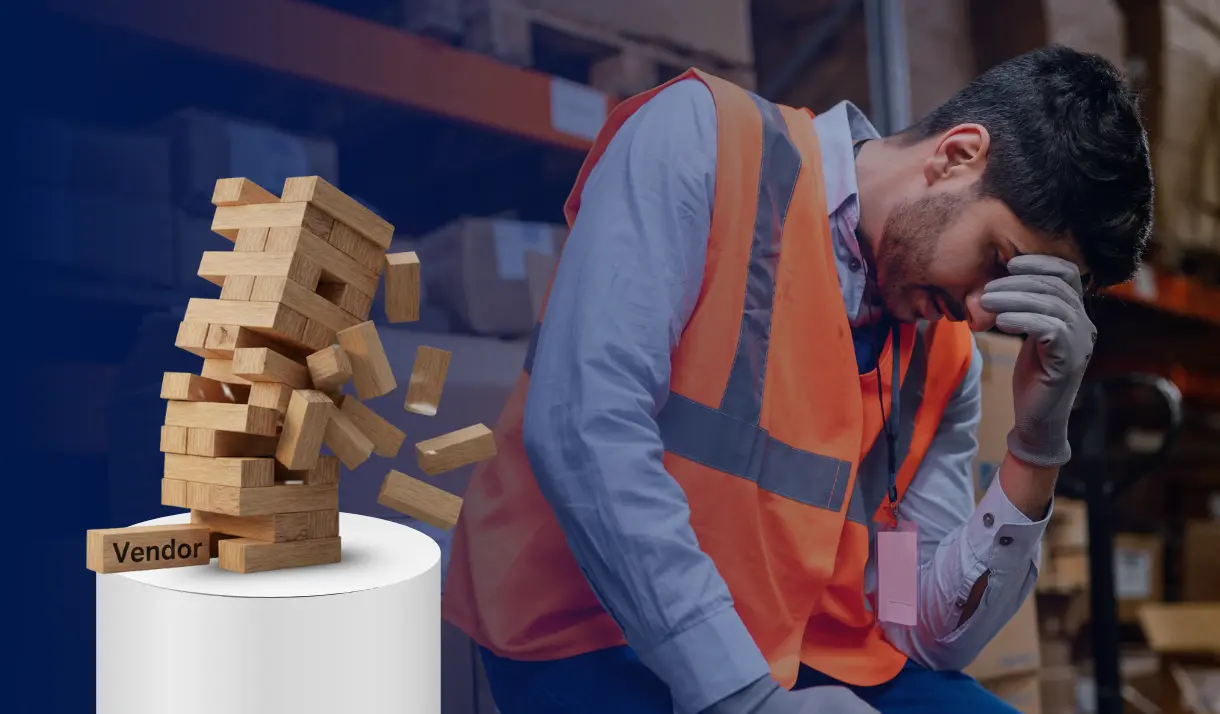

Vendor dependence doesn’t hit you like a crisis.
It builds slowly, quietly, year after year.
A supplier meets your quality standards.
They deliver on time.
Your team prefers them because coordination feels effortless.
And before anyone realises it, one supplier becomes the default, then the habit and then the only choice.
Not because they are the best. But because no one has bothered to question the arrangement. This is how vendor monopolies form, not through strategy, but through familiarity. And for manufacturers, that comfort can become a costly weakness.
The Problem: When One Vendor Holds All the Cards
Depending on a single supplier seems convenient as it is just one relationship to manage, one set of terms, one trusted partner. But the risks are significant:
- Operational risk: A delay or disruption from that supplier halts production.
- Cost risk: Without alternatives, manufacturers have little bargaining power and often accept inflated prices
- Quality risk: With no competition, suppliers may cut corners, leaving you stuck with subpar inputs.
- Strategic risk: Over‑dependence weakens your ability to scale or pivot when market conditions change.
In short, vendor monopolies create fragility in a system that thrives on flexibility.
Why It Happens
So how do manufacturers fall into this trap?
- Trust-based relationships: Longstanding ties with a single vendor feel safe.
- Limited ecosystems: In certain regions or industries, supplier options are genuinely scarce.
- Convenience: One reliable supplier seems easier than managing multiple.
- Lack of structured procurement: Many MSMEs still rely on manual processes, with little visibility into vendor performance or alternatives.
Real-World Impact
Vendor dependence isn’t theoretical, global supply chains have already shown how concentration around a few suppliers can disrupt entire industries.
For example, a recent supply disruption in the automotive electronics sector showed how fragile sourcing becomes when a critical chip is produced by only one supplier.
When that manufacturer ran into regulatory and operational hurdles, production of certain ECUs and repair parts slowed dramatically, even though every other part of the supply chain was stable.
The lesson:
If one supplier controls a critical component, even a small disruption can stop an entire category of products.
The ERP Solution: Building Resilient Supply Chains
Breaking free from vendor monopolies isn’t just about adding more names to your supplier list. It’s about structuring procurement so you’re never caught off guard.
A modern ERP purchase module provides exactly that structure. Instead of juggling spreadsheets or chasing updates on WhatsApp, procurement teams gain a clear, connected view of their supply chain:
- Demand-Based Purchasing
- Buy only when needed, guided by minimum inventory levels and actual material demand.
- Automate demand consolidation to reduce manual effort.
- Ensure timely availability of critical materials, preventing production delays.
- Vendor & Order Management
- Prioritize suppliers based on performance and lead times.
- Track pending purchase orders and expected deliveries on a single screen.
- Maintain rate contracts and agreements for cost-efficient procurement.
- Controlled Purchasing Environment
- Set inventory thresholds to avoid excess buying.
- Monitor overdue deliveries in real time.
- Reduce friction between procurement and production teams with automated tracking.
- Insights & Reporting
- Vendor performance dashboards highlight reliable vs. risky suppliers.
- Pending PO reports flag delays before they escalate.
- Stock level alerts prevent shortages and emergency purchases.
The result isn’t just more vendors on paper, but a procurement system that actively reduces dependency risk. By planning ahead, monitoring supplier efficiency, and keeping communication transparent, manufacturers can build supply chains that are resilient, cost‑efficient, and scalable.
Business Benefits
When procurement is structured and data-driven, the benefits ripple across the organization:
- Timely material availability prevents production delays.
- Better fund management avoids capital blockage from excess stock.
- Increased supplier efficiency improves decision-making and reduces risk.
- Streamlined communication eliminates friction between procurement and production.
- Cost optimization minimizes emergency purchases and freight costs.
Actionable Steps for Manufacturers
- Audit your current vendor dependencies. Identify where single supplier risks exist.
- Use ERP to map supply chain risks. Track vendor performance and delivery timelines.
- Onboard alternate suppliers. Even if they’re backup options, they reduce exposure.
- Monitor vendor performance monthly. Use dashboards to spot declining reliability early.
- Build contingency plans. Factor in lead times for local and imported materials.
Conclusion
Vendor monopolies are a silent risk that can cripple growth. When supply chains are already strained by delays, labour shortages, pricing fluctuations, and unpredictable vendor behaviour, relying on a single supplier is no longer sustainable.
ERP systems don’t fix vendors. They fix your visibility, preparedness, and control over the supply chain. A structured, data-driven procurement process transforms single-supplier dependence into a manageable risk, not a ticking time bomb.
If your factory’s continuity depends on one vendor’s good day, it’s time to change the equation.