
India’s manufacturing story is changing. The opportunity is no longer limited to setting up production capacity or assembling products at scale. The bigger opportunity is to build the capabilities that allow products to be developed, sourced, manufactured, quality-checked and delivered through a stronger, more connected ecosystem.
This shift was highlighted by Tata Sons Chairman N Chandrasekaran, who said India needs to move beyond assembly-led growth towards the ability to manufacture and ship a full range of products with end-to-end capabilities.
For Indian manufacturers, this raises an important question: Are we only increasing production capacity, or are we building deeper manufacturing capability?
Assembly Is Only One Part of the Manufacturing Story
Assembly is an important part of manufacturing. It creates jobs, attracts investment and connects Indian businesses to global supply chains. But the final assembly stage is only one part of the product journey.
A finished product may depend on hundreds or thousands of components, specialised suppliers, engineering inputs, tooling, materials and quality processes. If critical capabilities sit outside the organisation, problems in those areas can eventually affect the final product.
The next stage of India’s manufacturing growth is therefore not simply about assembling more products. It is about strengthening the capabilities behind them.
What End-to-End Manufacturing Capability Looks Like
End-to-end manufacturing does not mean that every manufacturer must produce every component internally. Modern manufacturing depends on specialised suppliers and global technology.
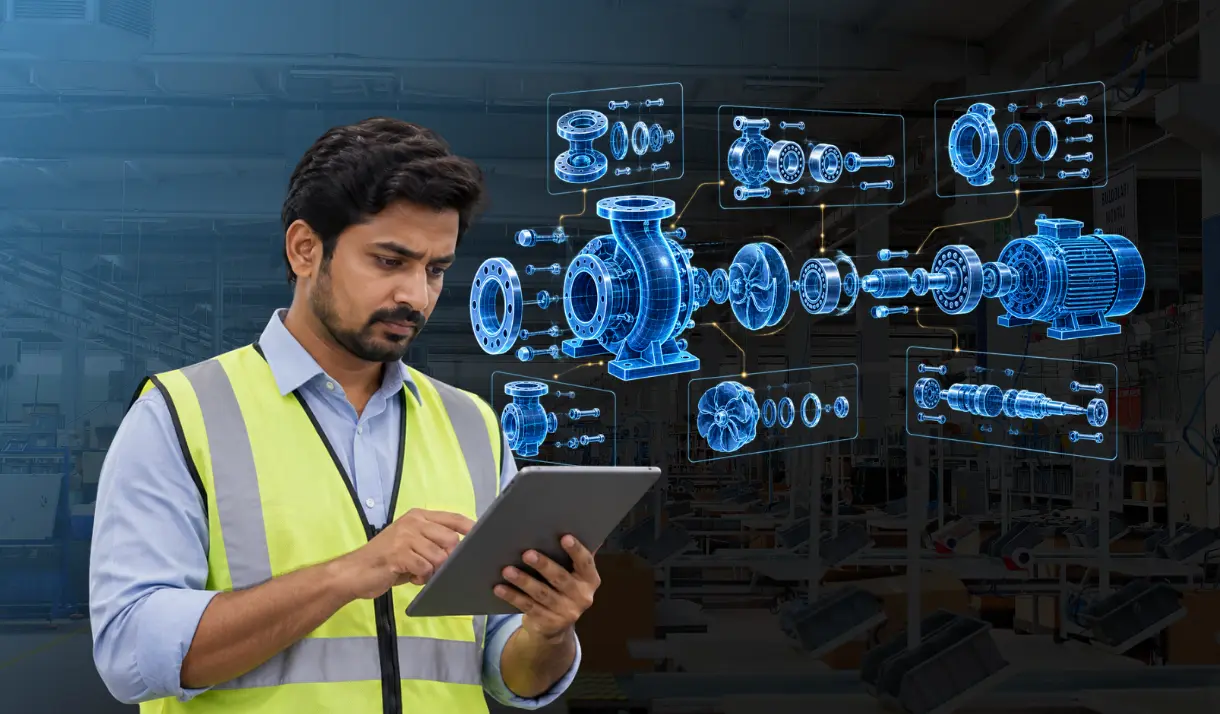
The difference is in how well a manufacturer can manage the complete product journey, from engineering and BOMs to material planning, procurement, incoming quality, production, WIP, costing and final dispatch.
When these stages work together, manufacturers have greater control over what they are building, what it costs and where problems are emerging.
The Supplier Ecosystem Becomes Part of the Product
A manufacturer’s product quality is closely connected to the quality of the components and materials entering its production process.
This makes suppliers more than purchasing relationships. They become an extension of the manufacturing ecosystem.
A supplier delay can stop production. A quality issue can affect an entire batch. A supplier that cannot scale with demand can become a bottleneck when the business wins a larger order.
As Indian manufacturers take on more complex products, they will need stronger visibility into supplier performance, material quality, delivery reliability and the impact of supplier issues on production.
Quality Cannot Sit Only at the End
End-of-line inspection can identify a problem, but it may not explain where that problem began.
Was the issue caused by the raw material? A purchased component? A particular batch? A change in the BOM? A production process? Or a missed inspection?
This is why quality increasingly needs to be connected with procurement, inventory, engineering and production rather than treated as a final checkpoint.
Traceability becomes important because manufacturers need to understand not only what went wrong, but where and why it went wrong.
More Capability Also Means More Complexity
As manufacturers expand their product range and take on more suppliers, plants, processes and customer requirements, the amount of information moving through the business increases.
A purchase order may be pending while production is waiting for material. Material may have arrived but still be under quality inspection. An engineering change may affect production while costing continues to follow an older version.
When these activities are managed through disconnected spreadsheets, emails and individual knowledge, keeping the entire operation aligned becomes increasingly difficult.
The more connected the manufacturing process becomes, the more connected the information behind it needs to be.
ERP Is Part of the Infrastructure Behind Manufacturing Capability
ERP cannot create manufacturing capability by itself. It cannot replace skilled people, reliable suppliers, good engineering or precise production processes. What it can do is provide the connected operational structure needed to manage them effectively.
An integrated manufacturing ERP such as SourcePro New Horizon can connect:
- BOMs and Engineering – Keep product structures, specifications and changes aligned with downstream operations.
- Material Planning – Identify material requirements based on production needs and availability.
- Procurement – Connect material requirements with purchase orders, suppliers and deliveries.
- Inventory – Give teams visibility into stock, reservations, movements and material availability.
- Production – Connect planned work with actual production activities and progress.
- Quality – Link quality checks and material status with the processes they affect.
- WIP – Track material and production progress as work moves through different stages.
- Costing – Connect material, production and other costs to understand what the product actually costs.
This gives teams a common view of what is happening across the business and reduces dependence on information sitting with individual people or separate systems.
For manufacturers moving towards more complex products and stronger end-to-end capabilities, this connected foundation becomes increasingly important.
India’s Next Manufacturing Opportunity
India does not need to manufacture every component domestically to become a stronger manufacturing economy. It needs the capability to manage more of the complete product journey with greater control, consistency and resilience.
That means investing in advanced manufacturing, skilled people, stronger suppliers, precision processes, quality systems, technology and the infrastructure that connects them.
The goal is not simply to assemble more.
It is to build the capability to take a product from concept and materials to production and delivery with greater ownership of the outcome.
Conclusion
Global competitiveness is not determined only by how quickly a product can be assembled. It depends on whether manufacturers can consistently build the right product, at the right quality, at the right cost, and deliver it when promised.
That is the shift from assembly-led growth to end-to-end manufacturing capability. And for India, it could be one of the most important steps in the next phase of its manufacturing journey.